
Indiana homeowner guide
Insuring an Indiana country home, from the fire station to the floodplain
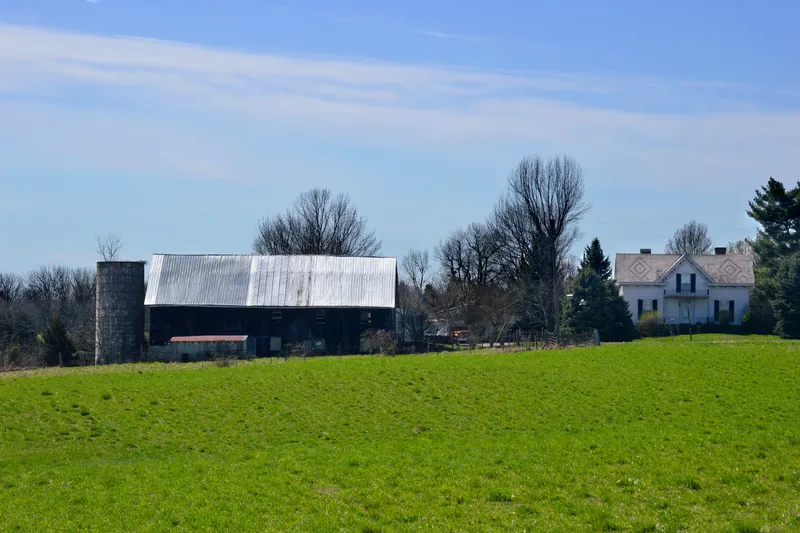
If you are insuring a country home in Indiana, start with a sketch of the property. Mark the occupied house, driveway entrance, outbuildings, source of household water, and any low area where water collects. Add the name of the fire department serving the address. Those details help an agent distinguish a house with a personal workshop from a small farm, check the fire information attached to the address, and identify water losses that need a separate coverage conversation.
You do not have to know the protection classification or identify the cause of an old basement stain before asking for help. Tell the agent what you have observed and what you want insured. A precise question about one building, one road or one pump is easier to resolve than a general assurance that everything on the acreage should be covered.
Identify the department that would respond
Start with the street address used for emergency response, including directional letters and the correct county. If your mailing address names a nearby town, the home may still lie beyond that town’s fire service area. Ask the serving department’s nonemergency office to identify the district and normally responding station. If you are unsure where to start, contact the township office. Reserve emergency dispatch for emergencies. Ask the agent how the insurer wants the location and driving distance documented.
A departmental website can illustrate why the details matter. The Town of Swayzee describes a fire territory covering several townships and lists distinct ratings inside the town and in the other townships it serves. That tells you something about its published service area. It does not establish how an insurer will classify an individual house there or somewhere else in Indiana. An address near the limit of a town’s utility or service district deserves a location check even if its mailing city looks familiar.
Follow the route a vehicle could actually take. A map tool can put a pin at the middle of a parcel, route across a private farm lane or show a nearby station across a river with no connecting bridge. Record the entrance and the public-road route to the house. Ask the agent to check what the carrier’s address lookup returns. If the first answer surprises you, compare the plotted building and the serving station with the department’s description before accepting a quote based on the wrong premises.
Describe water for firefighting and access to the house
A household well supplies the house. Whether a department can bring water to a fire is a separate question. Tell the agent if there is a public hydrant near the driveway and who confirmed its location. If a department uses tankers or another arrangement, ask the department how it describes the service to the address. A pond should be described as a pond until the department verifies a usable water supply and the insurer accepts the evidence it needs.
Access can matter even when the county road is easy to find. Describe a shared driveway, bridge, gate or unusually long lane, including who maintains it. Put a photograph of the entrance and the approach in the property file. Ask the department about any access concerns during a routine conversation, especially if you are planning a new gate or converting a barn into occupied space. An insurer can assess the description without the homeowner guessing what a particular truck can negotiate or promising a particular response time.
Suppose a survey places the house across a creek from the hydrant marked on an online map. The road loops back to a different crossing. Write that down. The agent can ask how the carrier measures distance and whether it wants a department letter or utility record. Do the same when a new water main goes in. A construction announcement and an operating hydrant are different stages of work. Let the carrier confirm any change to its classification and the date a revised premium would take effect.
Pay attention to grass, brush and the edge of the woods
A southern Indiana house can have a gravel front drive, a lawn on one side and a wooded slope close to the back porch. The insurer may see only the canopy in an aerial image. A current photograph from ground level can show the space near the building, whether the deck has stored materials underneath and how branches relate to the roof. Include the portions that still need attention. If work is planned, distinguish the estimate date from the date the work is completed.
Indiana’s state hazard mitigation plan identifies two common wildfire seasons. Spring brings an interval when dry leaf litter remains before new vegetation grows. Autumn adds fallen leaves that can dry in windy weather. Conditions vary from one week or property to the next. A property with woods deserves a conversation about fuel near buildings, how responders reach the house and how the household receives local warnings. A state hazard assessment is background information, separate from the property inspection and the carrier’s own decision.
Walk the home’s perimeter from an accessible spot. Note dry leaves accumulated against siding, wood stacked near the house, or debris caught near a detached building. Ask about appropriate maintenance when tree work is beyond your ability or near a utility line. Keep before-and-after photographs when work is done. For disposing of yard debris, Indiana’s environmental agency lists alternatives such as composting and drop-off facilities. An underwriting request for vegetation management does not require a homeowner to burn brush or clear land belonging to a neighbor.
Name each building and describe what happens inside
A building list can be short. For each structure, write its approximate dimensions, year and type of construction if known, roof material, utilities, contents and actual use. Distinguish a detached garage holding family cars from a pole building used to repair equipment for paying customers. Include a grain bin, animal shelter, rented bay or guest cottage if you want it considered. Let the agent decide which facts require follow-up instead of assuming the word “barn” settles what the building does.
Look at the offered other-structures limit and any building schedule. A combined limit may have to serve more than one building. For example, an illustrative $30,000 combined limit would leave a gap if the estimated replacement costs were $28,000 for the garage and $24,000 for a workshop that could be damaged in the same storm. Ask whether separate limits, an increase or different coverage is available. Check the settlement basis, deductible and any exclusion naming a structure. The Indiana Department of Insurance explains how dwelling and related limits commonly fit together.
Treat the equipment inside as a separate list. A tractor used on the grounds, a neighbor’s machine awaiting repair, tools used to earn money and a relative’s furniture present different questions of ownership and use. Ask which items the offer includes, which need scheduling and whether liability extends to the actual activity. A building appearing by name on a schedule says little by itself about a customer’s property inside. Tell the agent before leasing storage or accepting paid work that changes how the building is used.
Follow water all the way to where it entered
Two houses can have the same depth of water on their basement floors for entirely different reasons. At one property a supply line breaks above the utility room. At another, water runs down the drive, crosses a threshold and enters from outdoors. At a third, a floor drain backs up during a storm. Begin with the visible path, the timing, what equipment was running and whether the surrounding ground or nearby structures were affected. Preserve the observations before naming a cause you cannot verify.
For a broken plumbing line, ask the homeowner insurer how it treats resulting damage, repair of the failed part, access through a wall, and exclusions for repeated leakage. For water that rose through the drain or sump, check whether the homeowner policy includes a backup endorsement and its exact trigger, limit and deductible. For surface water, discuss flood coverage separately. In the federal program a backup can qualify when directly caused by a qualifying flood, as its coverage summary explains. Purchasing a backup endorsement does not establish protection against outside floodwater.
During one heavy rain, several mechanisms can occur together. A power outage stops the pump just as water crosses a window well. Take safe photographs of the window, the drain, and visible high-water marks. Keep the plumber’s account of what was tested and what could not be determined. Give potentially involved insurers prompt notice and the same factual chronology. Their adjusters will consider the cause, the evidence and the applicable contracts. You need not choose a final engineering explanation to tell them what happened.
Check the house on Indiana’s flood maps
Open the Indiana Floodplain Information Portal and locate the building itself. The state presents information from FEMA and Indiana DNR and explains how to switch to the effective layer. Keep the map date, layer and a screenshot that includes the building outline, road and waterway. For a long parcel along the Wabash or White River, the farmhouse, detached shop and access road may occupy different positions relative to mapped flood areas. A single dot representing the mailing address can obscure those differences.
The difference between river flooding and intense local rainfall was visible in southwest Indiana in June 2026. In its June 25–28 event report, the National Weather Service in Paducah recorded a three-day rainfall total of 10.85 inches at one Pike County observation site. The office also documented impassable roads and river flooding in the wider region. The measurement was taken at one site. A homeowner elsewhere in the county would still need evidence from the affected property. When planning ahead, walk the route rainwater takes from the county road to your driveway, and from the driveway to any below-grade entrance. Consider whether the route becomes impassable before water reaches the living space. Ask the agent how the offered policy treats damage to an access road, a detached building and the occupied dwelling separately.
FEMA’s federal flood program requires a qualifying event. Its explanation of flood causes describes the extent requirement in terms of two or more properties or at least two acres. The policy definition and covered cause still matter, including that one affected property must be yours when using the properties test. A parcel does not have to contain two acres to meet the properties test. A wet patch confined to a small area of the basement does not on its own establish that a qualifying flood occurred.
If a lender’s determination differs from what the map appears to show, obtain the written determination and confirm the specific structure the lender evaluated. Preserve any elevation records and ask the local floodplain administrator how to interpret the layers. DNR explains when a Floodplain Analysis and Regulatory Assessment is used for permitting and certain map amendment requests. A screenshot alone does not change a federal map or the lender’s requirement. You can still ask for a flood quote while a location question is being resolved.
Inventory the basement before comparing flood options
Walk through each area below grade and record its use, the floor level on all sides, the mechanical equipment and the things you would need to replace. A room called a garden level in a listing may meet FEMA’s basement definition if its floor lies below ground on all sides. Photograph the exterior grade as well as the room. Keep model and serial numbers for the furnace, water heater and other equipment. That record helps a reviewer distinguish an installed item from one stored for later use.
Federal basement protection is limited. FEMA’s basement fact sheet identifies eligible building equipment and explains conditions such as installation in working position and connection to power where appropriate. Contents require contents coverage and only certain items qualify below grade. Finished flooring and a basement sofa illustrate why the cost to restore a finished room can exceed what a federal policy would pay. Ask any private flood insurer to identify its own definition, property limits and below-grade restrictions. The federal list cannot establish the terms of a private offer.
Read the building and contents deductibles separately. Also identify where a family would live if flooding made the only access road unusable or left the home unsafe to occupy. Ask whether the particular policy provides temporary living costs for the event you are considering. For planning, consider moving irreplaceable papers and other vulnerable belongings to an accessible level above the basement. The NFIP’s mitigation guidance also discusses sump pumps, alarms and battery backup. These improvements help manage damage even when they do not change a policy limit.
Include wells, septic systems and service interruptions
Know what provides drinking water, what moves wastewater and which components need electricity. Record the well location, pump type if known, location of the pressure tank and any prior invoices. Indiana DNR’s water well record database can help identify a well from location information. The records include locations with varying degrees of verification. Compare the record with the installer’s documents, dates and the house it actually serves before sending it to an agent. A well drilled for an old barn might appear near the household well.
For a well problem, ask about damage to the pump assembly, equipment inside the house and the underground connection separately. Failure from age, direct lightning damage, mechanical breakdown and damage caused by flooding raise different coverage questions. If the pump stops, record any evidence of a general power outage and obtain the technician’s diagnosis. Replacing a worn pump might restore water to the home, yet an invoice alone may not establish a cause that a particular policy insures. Ask about diagnostic charges and any service-line endorsement as distinct items.
If the house shares a well or a driveway, look up the written maintenance arrangement. Who owns the pump and what portion of a repair bill falls on each household? Does a detached building on another parcel supply power to the shared equipment? What happens if a rental unit is also connected? Those details are especially valuable during a purchase. An agent can review the insured premises and named parties against the real arrangement before a service interruption leaves everyone trying to find the same missing document.
Put a country-home offer to a practical test
Picture a home with three acres, a workshop where the owner sells refinished furniture, and a finished basement containing the furnace. Start with a wind loss to both buildings. Which roof limits and deductibles apply, and who owns the tools and stock? Then imagine a customer visiting the workshop, or a stream overflowing and damaging the furnace. Different parts of the application and different policies may answer those questions. One declaration line describing the property as a single-family residence cannot resolve all of them.
Ask the agent to write down which policy or form addresses each material exposure and where the remaining gap lies. Keep the proposed building list, application details, quote and endorsement wording together. Check the premises address, dwelling occupancy and effective dates. If a seasonal cabin is empty between visits, say how often someone checks it and how heat is maintained. If relatives will move into the shop apartment after closing, give the agent that date before choosing insurance that assumes exclusively private storage.
Finally, arrange the file so another household member can use it during an outage. Keep insurer claim numbers, the serving department’s nonemergency contact, the well contractor’s number and the latest coverage summaries accessible offline. Update the sketch when you add a building, alter a driveway or start renting storage. The briefest useful update is often one dated sentence explaining what changed, a photograph, and a question about whether the existing policy still fits. Wait for written confirmation of any requested coverage change.
Common questions
Will a volunteer fire department make my house uninsurable?
It is worth asking for a property-specific review. Give the insurer the serving department, station and access details. A volunteer department may cover a large territory, and the information for a house outside town can differ from the answer for an address inside town. Ask what the specific carrier needs to confirm the location before paying for a survey or making improvements.
Is my pond the same as a hydrant for the insurance application?
Describe the pond and any equipment installed for fire-department access. Ask the serving department whether it recognizes and can use that water source, then ask the insurer what it accepts. A pond seen on an aerial map does not document access, available water or a particular insurance classification. A personal well serving the house raises its own set of questions.
Can my home policy cover land I lease to a neighboring farmer?
Give the agent the acreage, activity, lease terms and location of any buildings or equipment the neighbor uses. Ask about your premises liability as landowner and which activities the homeowner policy excludes. Have the agent distinguish your property from the tenant’s equipment and crops. An informal agreement can change the way a property is used just as much as a written one.
If I have federal flood coverage, does it extend to the pole barn?
Identify the structure and its use. The NFIP dwelling form can apply up to ten percent of the building limit to a qualifying detached garage, drawing from the dwelling limit. That feature does not encompass every outbuilding. A barn used for farming needs its own evaluation. Ask about separate building insurance and check contents separately. Federal coverage questions and answers explain the dwelling form’s garage provision.
What if the creek never reached the house but water entered through the drive?
Report the outdoor water path and the extent of inundation you observed. A qualifying flood can involve runoff from heavy rain as well as a river overflowing. The adjuster will evaluate the particular event under the policy. Capture safe photographs showing the approach, the doorway and any effect on adjacent ground. Water confined to a plumbing system presents a different fact pattern.
Will a sump-pump endorsement replace a failed pump?
Ask whether the endorsement pays for resulting damage, the failed equipment, or both, and whether the water must enter in a specified way. Check the dollar limit and deductible against the actual cost of cleanup and replacing vulnerable items. A battery backup can reduce dependence on grid power, but installing one does not expand the coverage described in the contract.
Sources
- Indiana Department of Natural Resources · Floodplain Information Portal
- Indiana Department of Homeland Security · 2024 State Hazard Mitigation Plan, wildfire section
- Indiana Department of Environmental Management · Alternatives for leaves and yard waste
- Indiana Department of Natural Resources · Water Well Record Database
- National Flood Insurance Program · The cause of flooding
- FEMA · Basement coverage under the National Flood Insurance Program
- National Flood Insurance Program · Answers to questions about the NFIP
- Indiana Department of Insurance · Property insurance
- National Flood Insurance Program · Sewer backup and the federal policy
- National Flood Insurance Program · Reducing flood damage
- Town of Swayzee · Volunteer department and fire territory
- National Weather Service Paducah · June 25–28, 2026 flash flooding